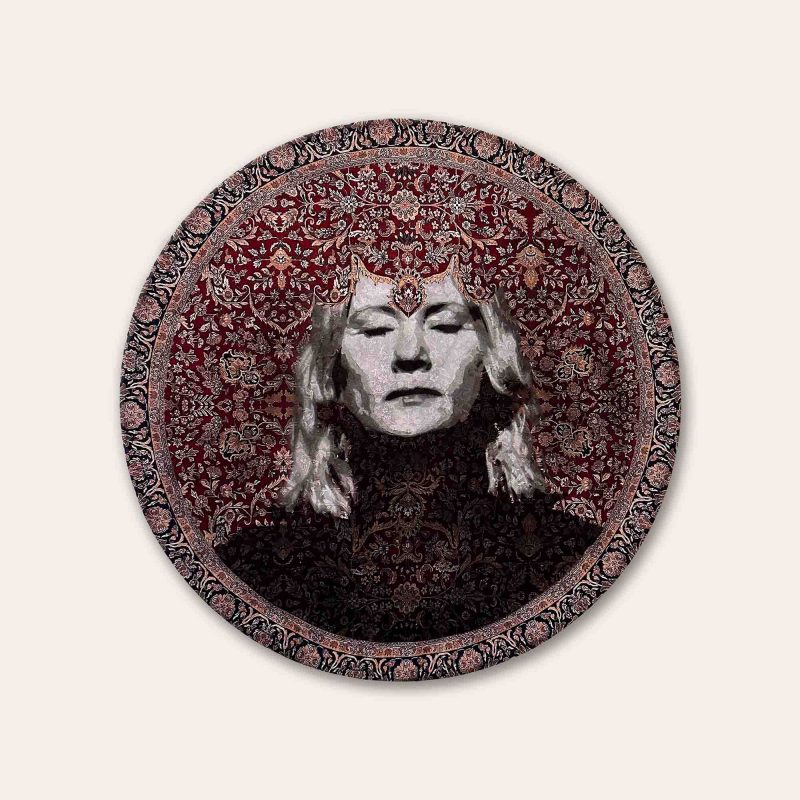
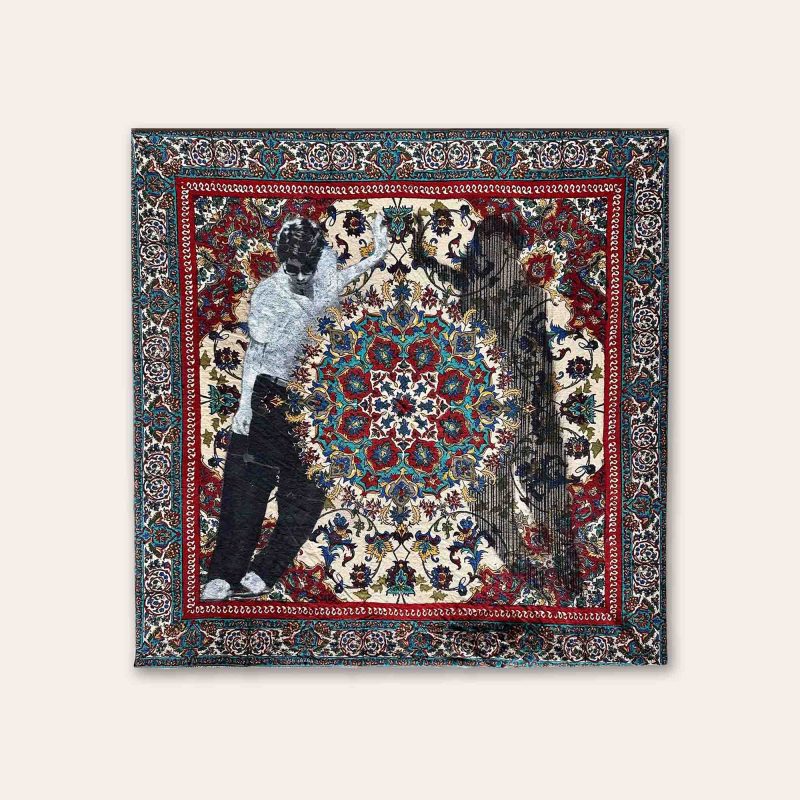
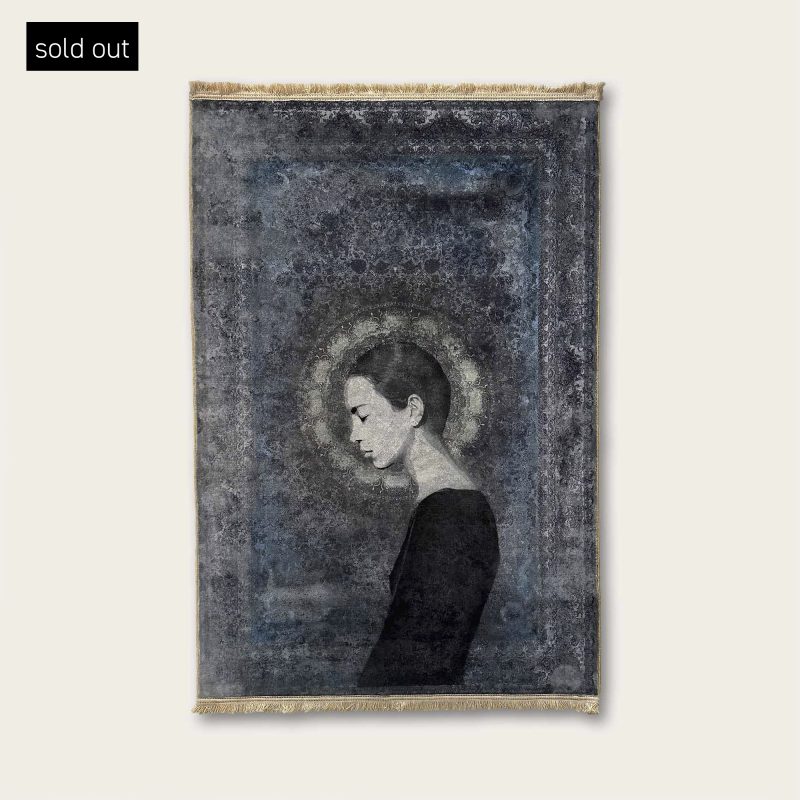
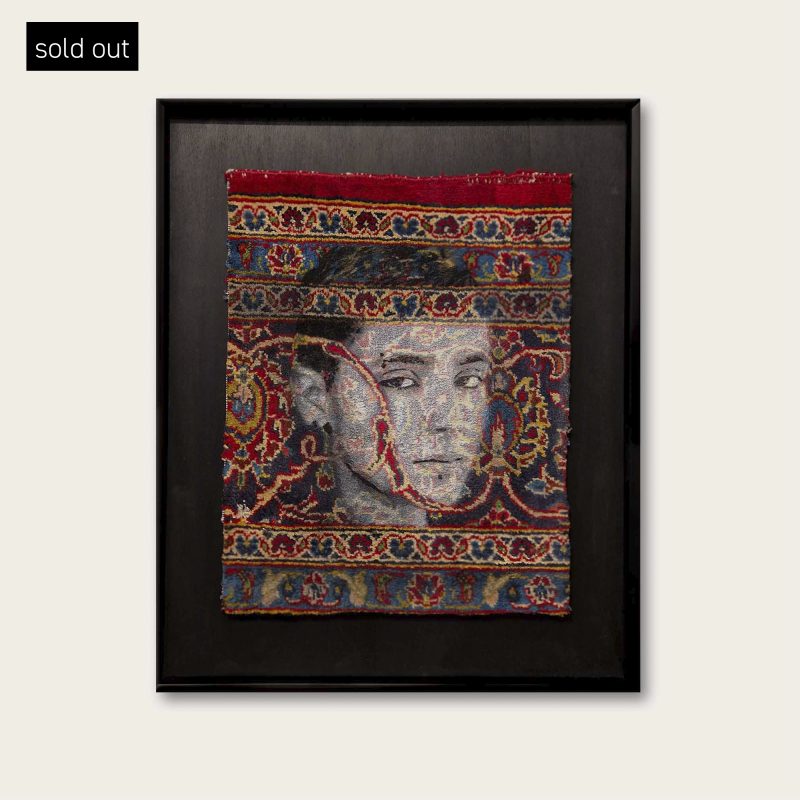
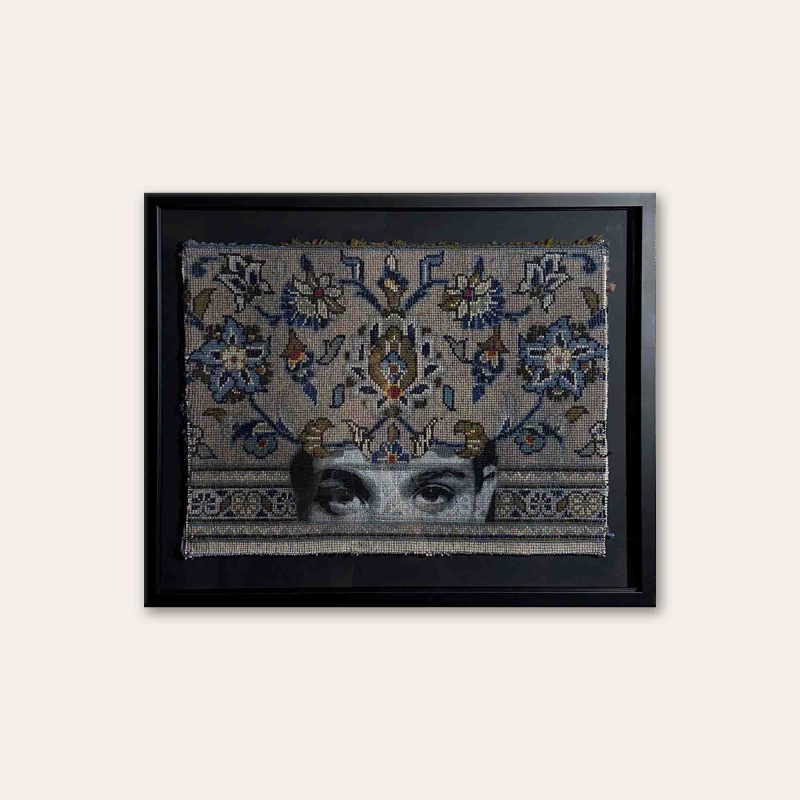
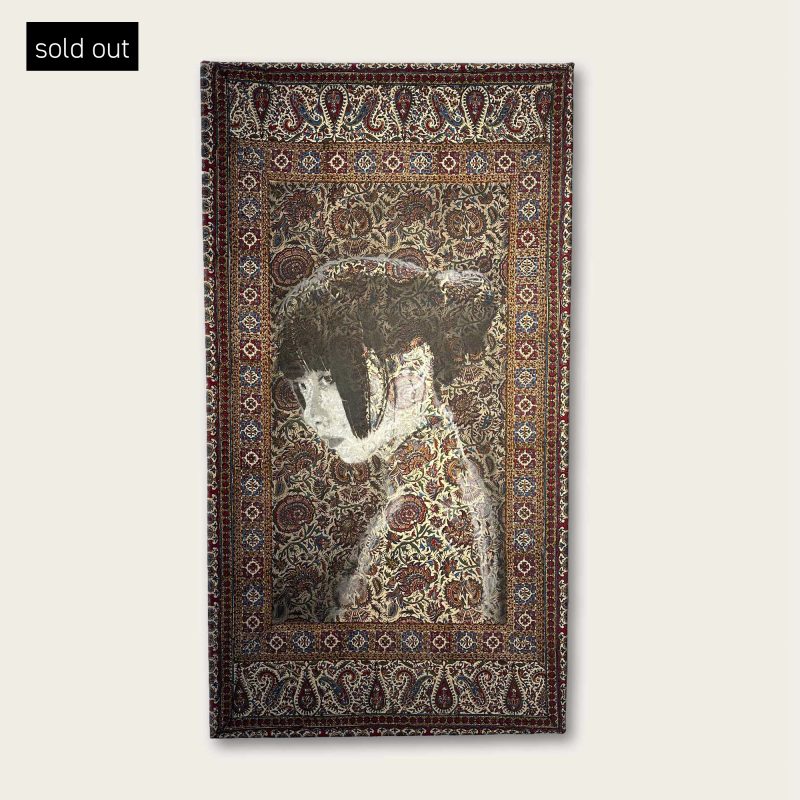
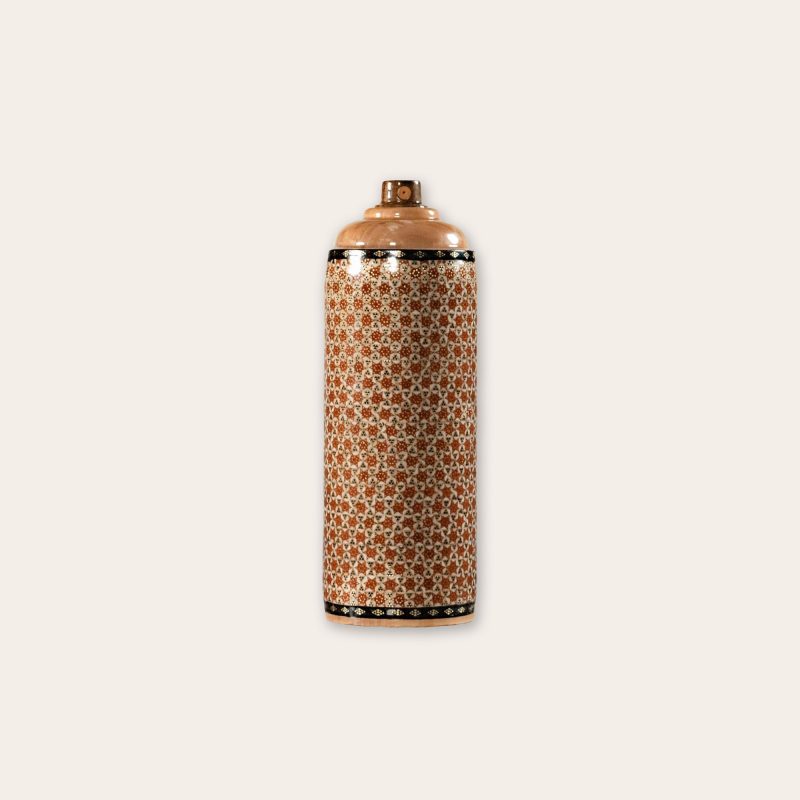
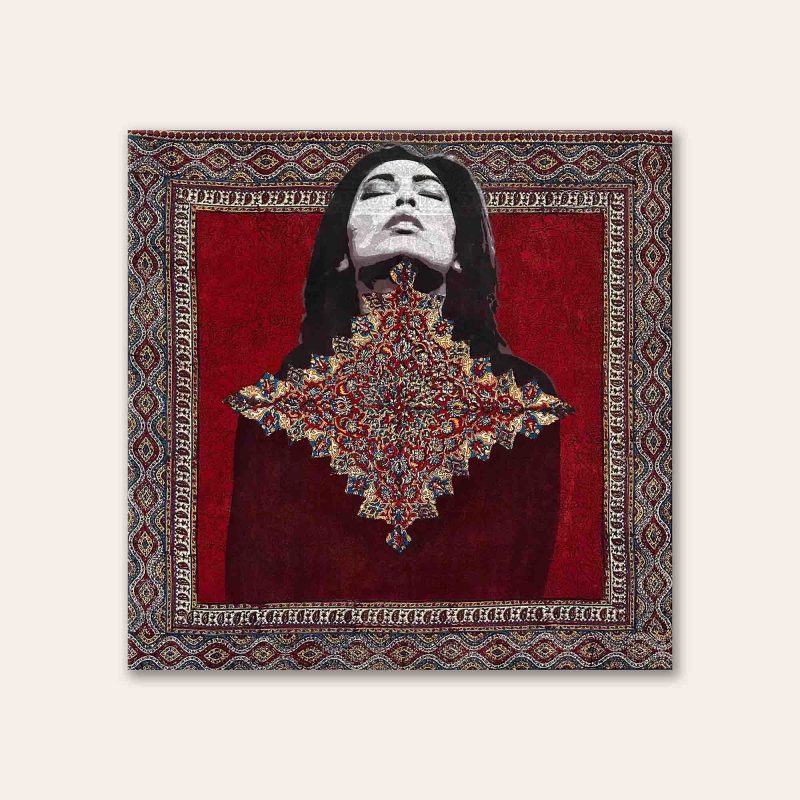
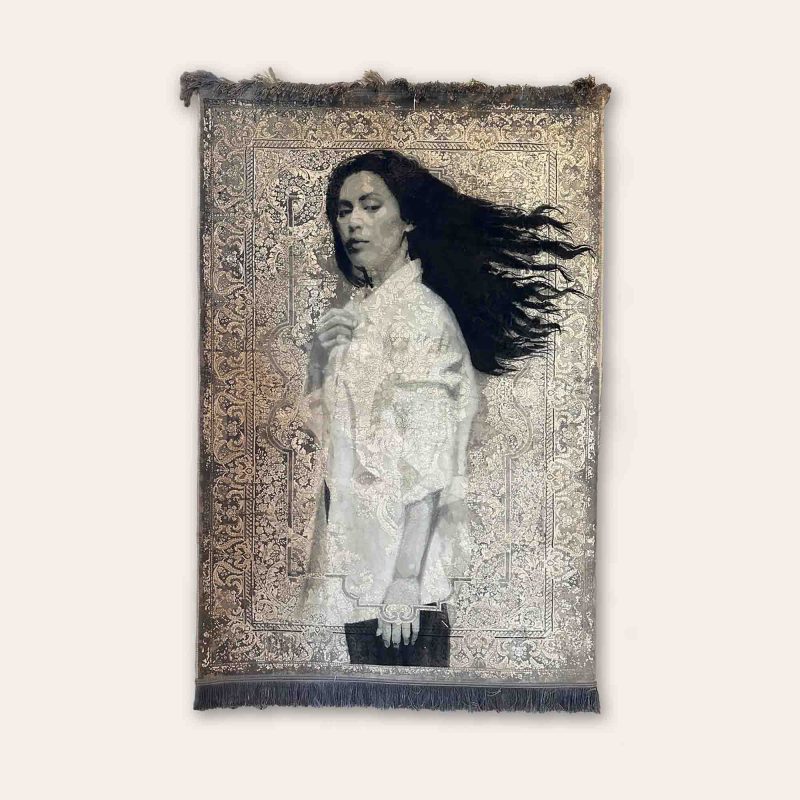
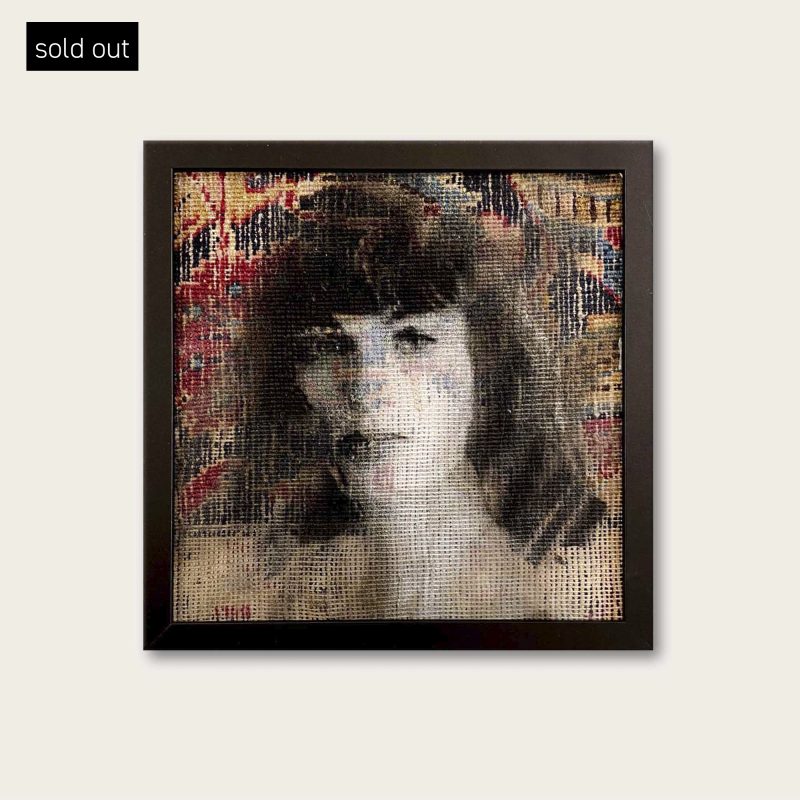
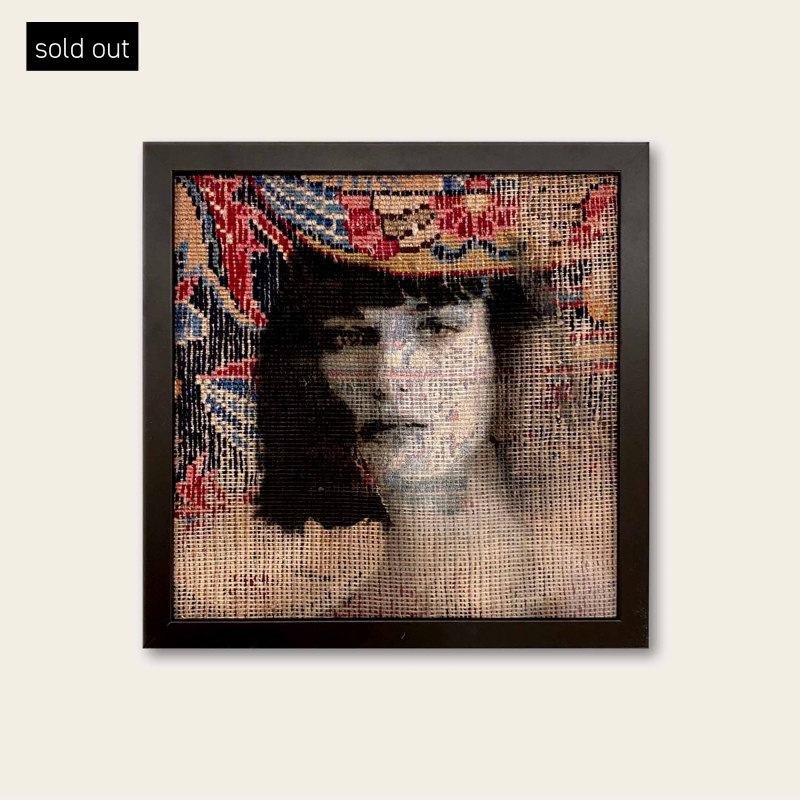
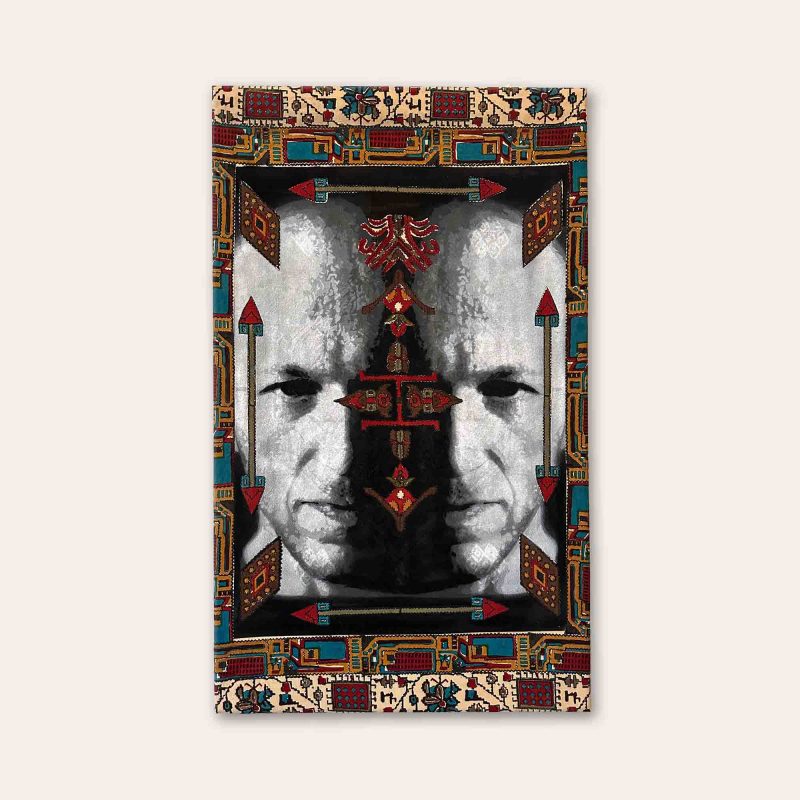
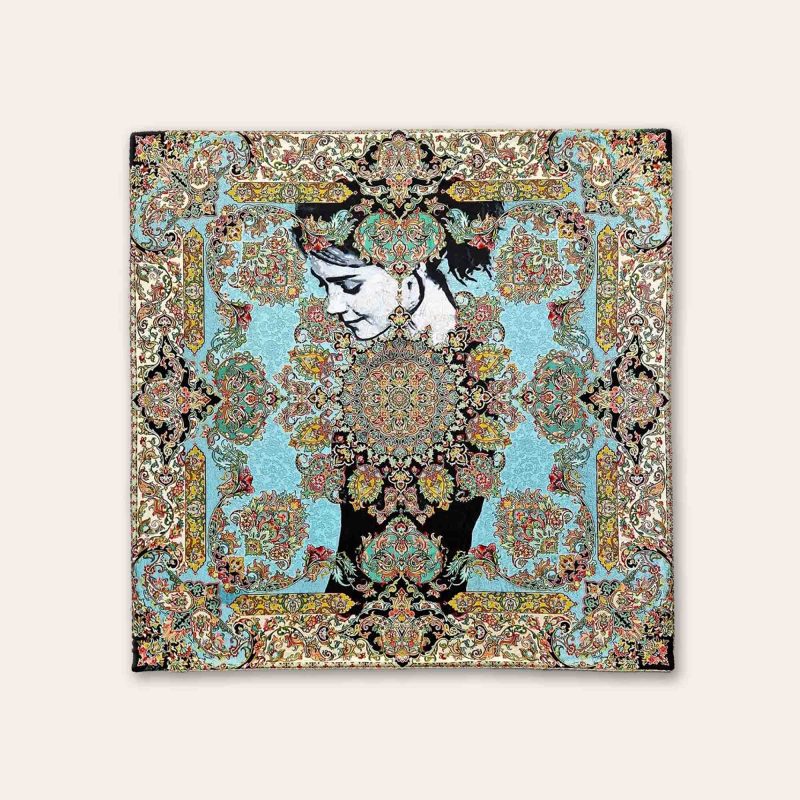
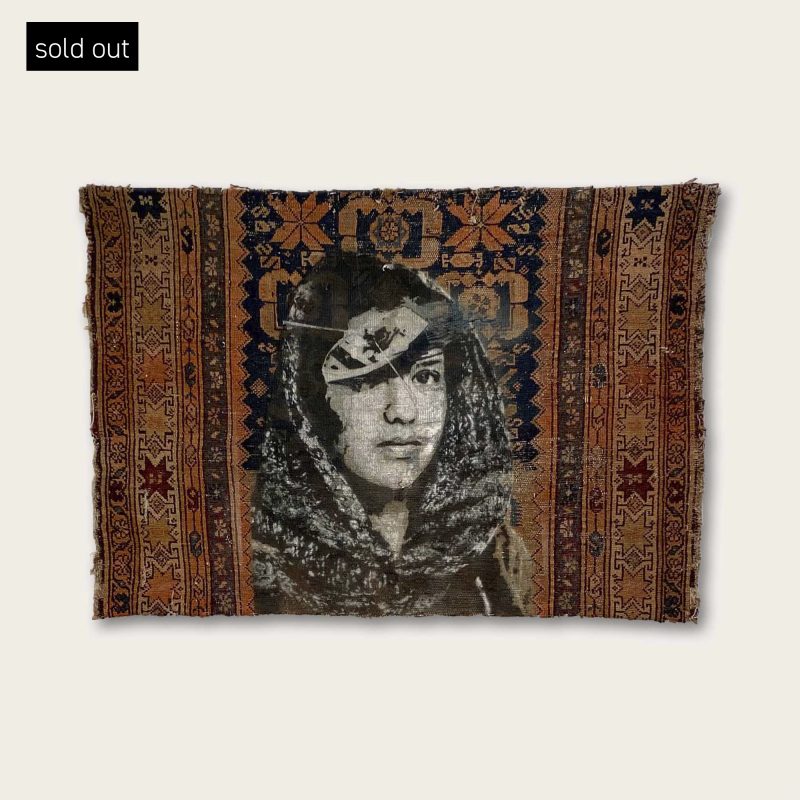
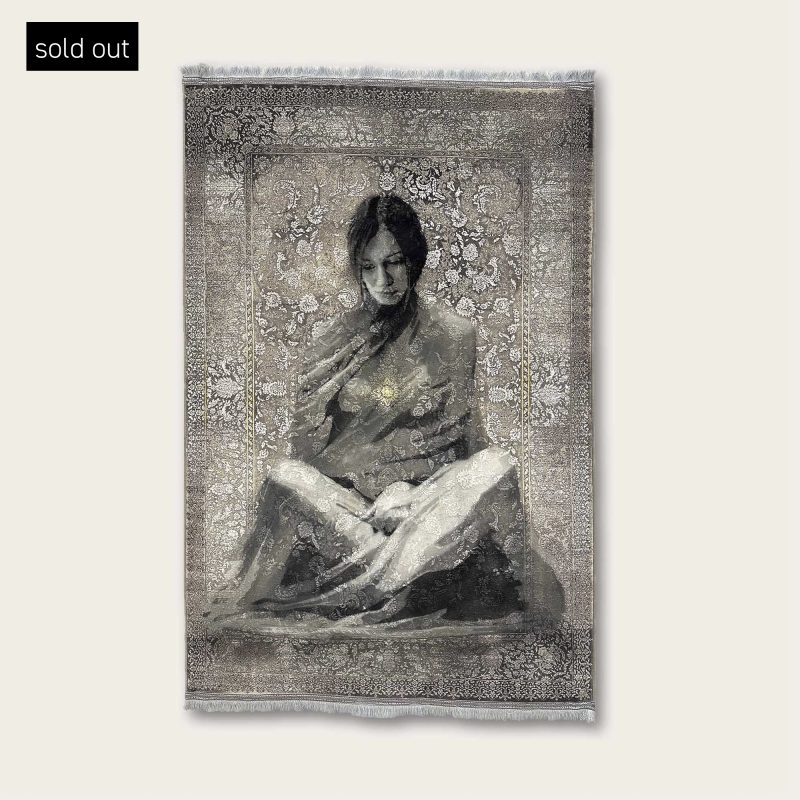
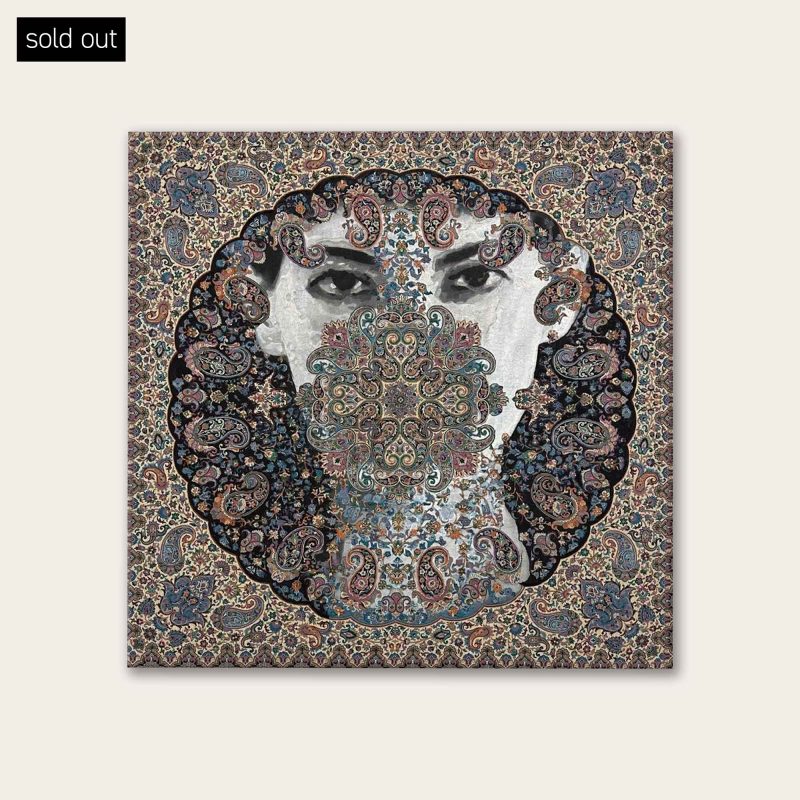
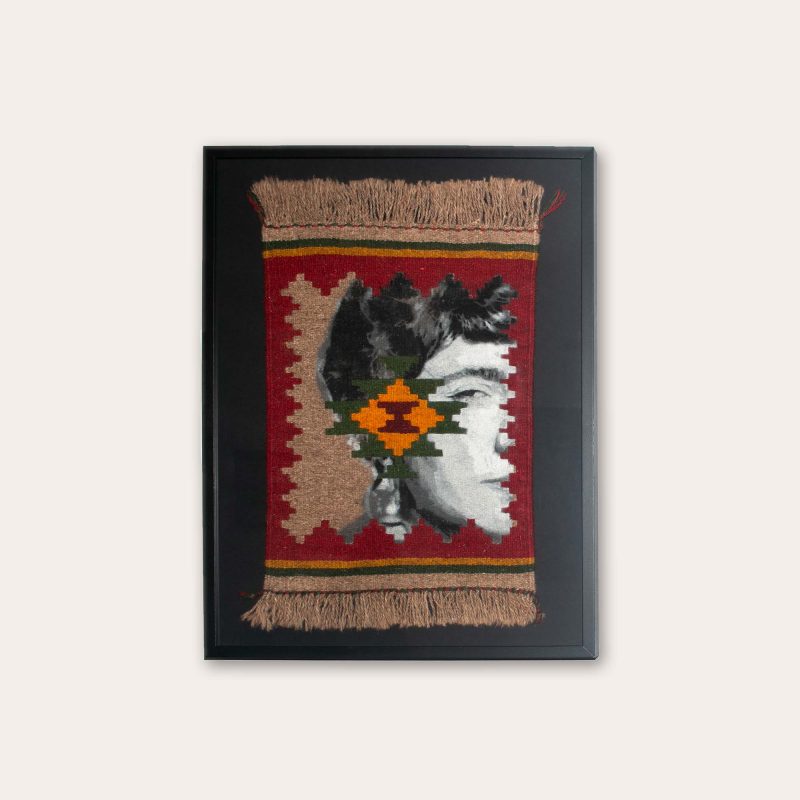
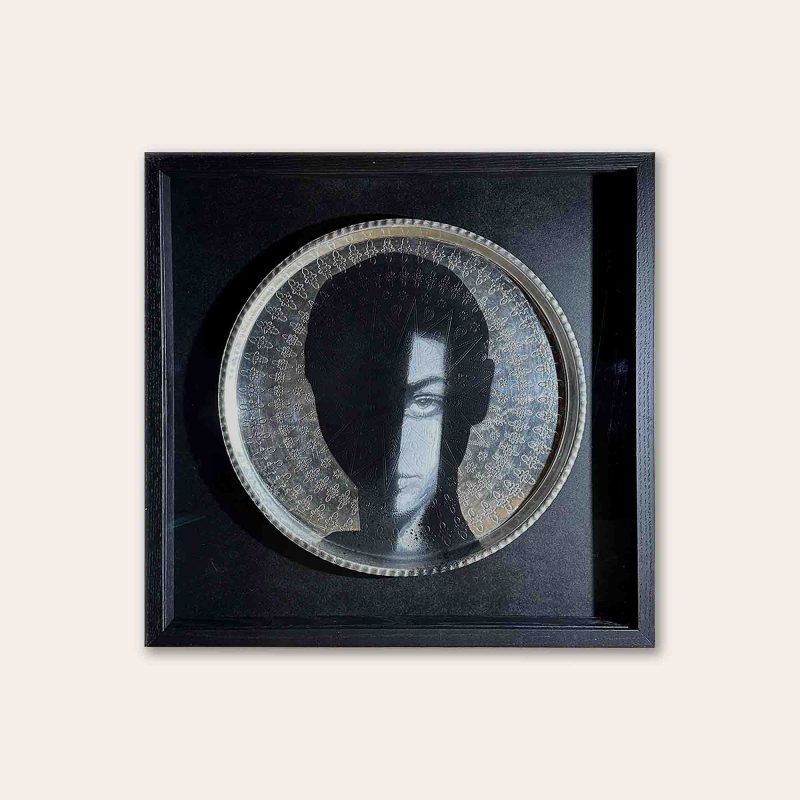
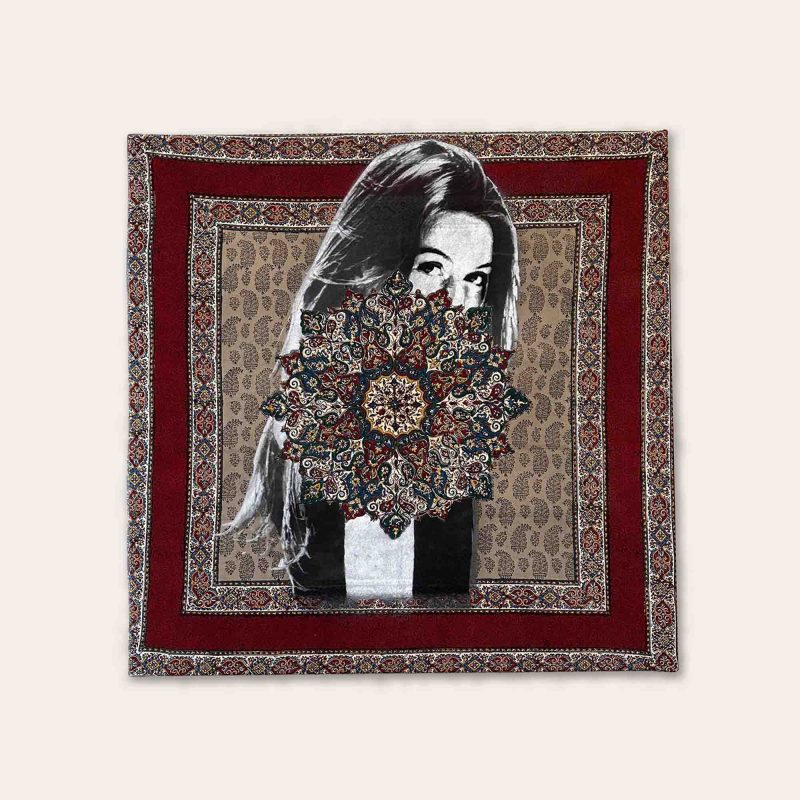
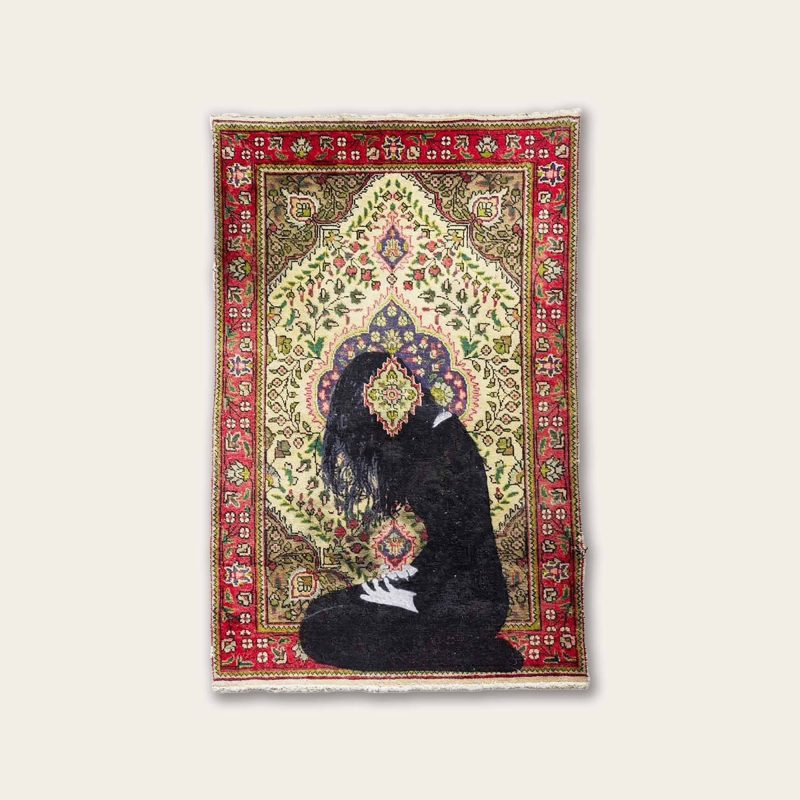
Nafir’s “never-ending fight” represents the artist’s ultimate admiration for the daily and lifelong human struggle. From their country of origin, Iran, to the many cities they have visited thanks to their international reputation, Nafir has always been most interested in observing people, especially their resilience in the face of adversity. Of all the battles, those fought by women have touched them the most, shaped by the significant female influence in their youth. This solo exhibition of Nafir focuses on new works created in collaboration with Berlin photographer Mischa Fanghänel. These jointly created pieces feature subjects that engage the viewer with sad yet bold eyes, carrying the heavy burdens of being human – the relentless search for liberation, connection, and meaning amidst internal and external challenges. Yet, despite these burdens, they stand tall, merging with and emerging from intricate patterns of Persian textiles, as complex as the battles they endure. Fanghänel’s photographs bring a raw, intimate perspective to the pieces, capturing the essence of each subject’s silent struggle and adding another layer of storytelling to Nafir’s intricate compositions. Together, they create a dialogue between the photograph’s realism and the surreal patterns of Persian textiles, enhancing the viewer’s emotional connection to the art. The result is a faithful testament to the beauty and sorrow of a timeless fight, resonating with our innermost worlds. It invites viewers to reflect on their own personal interpretations of resilience, and the fact that some battles are never won and always fought.
[DE]
About the Artist:
Zaachariaha Fielding (*1991) is a multi-disciplinary artist originally from the Mimili Community in the Aṉangu Pitjantjatjara Yankunytjatjara (APY) Lands, currently working out of the APY Collective on Kaurna land/Adelaide. Fielding’s energetic and visceral paintings exist as contemporary works whilst acknowledging and honoring the visual language of their culture. Fielding’s creative and cultural spirit lays bare the constellations of his emotions, memories and experiences in his artworks. About his work, Fielding shares: “I was raised on desert country in the eastern Anangu Pitjantjatjara Yankunytjatjara Lands, and come from a long line of multidisciplinary artists. I am compelled to make work that honors the visual language of my ancient culture. The iconography reflects the way I live my culture in the present, as a constant feature of my world, and visualizes how I interact with the beings that populate the Tjukurpa I’ve inherited.” Having established himself as a critically acclaimed musician, as one half of the duo Electric Fields, Fielding is compelled to create art in whichever form is available: A few weeks ago, Electric Fields represented Australia at Eurovision performing the song “One Milkali (One Blood)” in Sweden – each track a mashup of electric soul and Indigenous storytelling, animated by Fielding’s rich, androgynous tone singing lyrics alternately in Pitjantjatjara, Yankunytjatjara and English. Fresh from representing Australia in Eurovision 2024, Fielding last stuns at Australian Fashion Week with ‘Romance Was Born’ collaboration. Fielding’s artistic work has been recognised in major art awards, most notably as Winner of The Wynne Prize – Australia’s oldest prize for landscape painting – by the Art Gallery of New South Wales (2023); a finalist in the Ramsay Art Prize at Art Gallery of South Australia (2021); and the National Aboriginal and Torres Strait Islander Art Awards at Museum and Art Gallery of Northern Territory (2021). His work is currently held in important public collections including the National Gallery of Victoria, Artbank and numerous private collections.